How to Personalize the Shopping Experience for Ecommerce Customers
Marketing & Growth
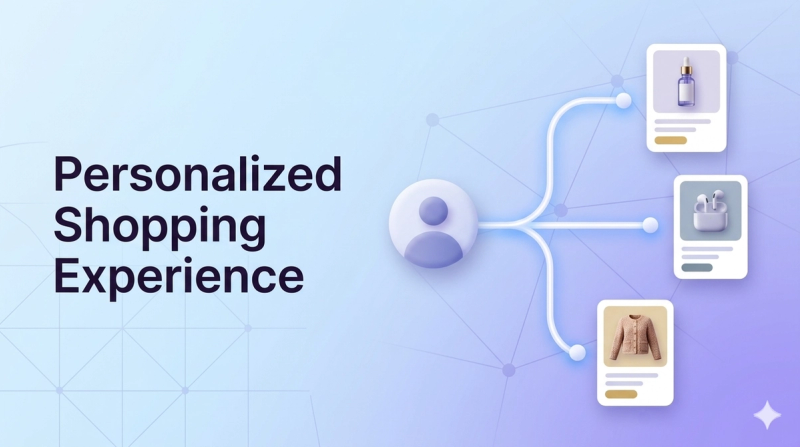
Modern ecommerce customers expect more than just products.
They expect:
- Relevance
- Guidance
- Personalization
If your store shows the same experience to every visitor, you are leaving revenue on the table.
Personalization is no longer optional—it is a core driver of conversion, retention, and customer satisfaction.
In this guide, you'll learn:
- What ecommerce personalization is
- Why it matters
- The most effective personalization strategies
- How to implement personalization step by step
- How quizzes and zero-party data power personalization at scale
What Is Ecommerce Personalization?
Ecommerce personalization is the practice of tailoring the shopping experience to each individual customer based on their behavior, preferences, and needs.
Instead of showing the same products to everyone, you show the right products to the right person.
Personalization can affect:
- Product recommendations
- Website content
- Messaging
- Offers
- Emails
Why Ecommerce Personalization Matters
1. Higher Conversion Rates
When users see relevant products, they make decisions faster and are more likely to buy.
2. Better Customer Experience
Personalization reduces friction, confusion, and overwhelm. It creates a smoother journey.
3. Increased Retention
Customers are more likely to return when they feel understood and receive relevant recommendations.
4. Higher Average Order Value
Personalized recommendations increase cross-sells and upsells.
5. Competitive Advantage
Most stores still offer generic experiences. Personalization helps you stand out immediately.
Types of Ecommerce Personalization
Personalization can be implemented across multiple layers of your store.
1. Product Recommendations
The most common and impactful form.
Examples:
- "Recommended for you"
- "Based on your preferences"
2. Dynamic Content
Change what users see based on behavior, segment, or location.
Example: different homepage for new vs returning users.
3. Email Personalization
Send emails based on interests, quiz results, and purchase behavior.
4. Personalized Landing Pages
Different users see different messaging and different products.
5. Guided Selling Experiences
Instead of browsing, users are guided through a decision-making process. This is where quizzes play a key role.
The Problem with Traditional Personalization
Most ecommerce personalization relies on behavioral tracking, purchase history, and algorithms.
This creates limitations:
It Is Reactive
It responds to past behavior—not current intent.
It Is Often Inaccurate
Behavior does not equal preference.
It Struggles with New Users
No data = no personalization.
The Shift Toward Zero-Party Data
Modern personalization is moving toward explicit user input.
Instead of guessing, you ask. This is called zero-party data.
The Role of Quizzes in Personalization
Quizzes are one of the most effective personalization tools available.
Why Quizzes Work So Well
They:
- Ask directly
- Capture structured data
- Deliver instant results
What Quizzes Enable
- Real-time personalization
- Accurate recommendations
- High-quality segmentation
Example
Instead of showing all products, you ask 5 questions and recommend the right product.
Personalization vs Product Discovery
Most ecommerce stores rely on navigation, filters, and search. This assumes users know what they want.
But most users don't.
Personalization replaces exploration with guidance.
How to Personalize the Shopping Experience
Here is a practical framework.
Step 1 — Identify Key User Data
Start with what matters most:
- Preferences
- Goals
- Budget
- Use case
Step 2 — Segment Your Audience
Group users based on needs, behavior, and intent.
Example:
- Beginner vs advanced
- Budget vs premium
Step 3 — Choose Your Personalization Method
Options include:
- Product recommendations
- Email segmentation
- Quizzes
- Dynamic content
Step 4 — Implement Personalization Tools
Use tools like:
- Quiz platforms (Quizell)
- Email tools (Klaviyo, HubSpot)
- Analytics tools
Step 5 — Test and Optimize
Measure:
- Conversion rate
- Engagement
- Revenue per user
How Quiz Funnels Enhance Personalization
A quiz funnel takes personalization further.
It:
- Captures intent
- Segments users
- Delivers tailored outcomes
AI and Personalization
AI is increasingly used to predict preferences, optimize recommendations, and improve accuracy.
However, AI is only as good as the data. That's why combining AI with quizzes is powerful.
Personalization Strategies That Work
1. Guided Product Recommendations
Use quizzes to recommend products and reduce decision fatigue.
2. Segment-Based Email Flows
Send emails based on preferences and quiz results.
3. Personalized Offers
Offer relevant discounts and tailored bundles.
4. Behavioral + Explicit Data Combination
Combine behavior (clicks, purchases) with zero-party data (quiz answers).
Real-World Examples
Example 1 — Skincare Brand
User answers: skin type, concern.
Result: personalized routine.
Example 2 — Supplement Brand
User answers: goals, lifestyle.
Result: custom supplement stack.
Example 3 — Ecommerce Store
User answers: budget, occasion.
Result: product recommendations.
Common Mistakes to Avoid
Over-Personalization
Too much complexity can hurt UX.
Relying Only on Behavioral Data
Leads to inaccurate recommendations.
Ignoring New Users
No personalization = lost conversions.
Weak Implementation
Personalization must be visible and meaningful.
Best Practices
- Start with high-impact areas (product recommendations)
- Use quizzes for immediate personalization
- Keep experiences simple
- Continuously test and improve
- Combine multiple data sources
Personalization in a Cookieless World
As cookies disappear, personalization must rely on first-party data and zero-party data.
Quizzes are one of the most effective tools for this.
What Happens Next
Once you implement personalization, you will:
- Increase conversions
- Improve user experience
- Build stronger customer relationships
- Generate more revenue
Conclusion
Ecommerce is no longer about showing products.
It is about showing the right product to the right person.
Personalization is how you achieve that. And quizzes are one of the fastest, most effective ways to implement it.
Ready to Personalize Your Store?
With Quizell, you can:
- Build interactive quizzes
- Deliver personalized recommendations
- Collect zero-party data
- Optimize with analytics and A/B testing
Start personalizing your shopping experience and turn more visitors into customers.