What Is a Sales Funnel and How to Build an Effective Funnel
Sales & Conversion Strategy
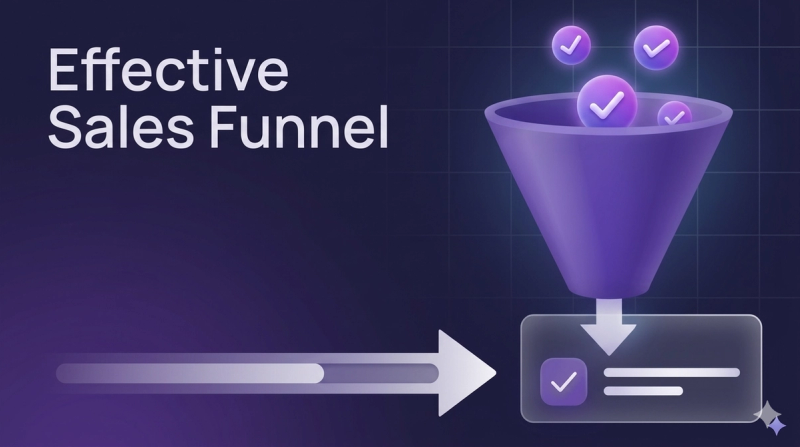
A sales funnel is the path a buyer takes from first contact to purchase. It starts wide with many people who show interest. It ends narrowly with fewer people who take action.
If you run an online business, the funnel gives structure to your marketing. It shows what to say, when to say it, and what to measure. It also helps teams stop guessing. They can improve one step at a time with real data.
What a Sales Funnel Really Means
A sales funnel is a model that describes how prospects move through your buying process. It is not a single page or one ad. It is the full system that turns attention into revenue.
Think of it as a connected sequence. Someone sees a post. They click to learn more. They sign up. They receive value. Then they decide. Each step reduces friction and builds confidence, so the buyer feels ready to move forward.
Sales Funnel Stages and What Happens in Each One
To build a strong funnel, you need clear steps. The most common sales funnel stages follow a simple flow. They move from awareness to action.
Awareness comes first. People discover your brand through search, social, ads, partners, or referrals. The goal is simple. Get the right people to notice you and click.
Next comes interest and consideration. Prospects compare options and look for proof. They read guides, watch demos, check reviews, and ask questions. Your job is to help them decide faster with clear benefits and useful content.
Then comes conversion. This is the moment of purchase or commitment. It can be a checkout, a booked call, or a paid plan. The best funnels remove doubt here with strong offers, a clean design, and focused messaging.
Finally, retention and expansion matter too. A funnel should not stop at the sale. Follow-up emails, onboarding, upgrades, and referrals can turn one customer into long-term growth.
What Is a Sales Funnel Analysis and Why It Matters
Many teams build funnels, then stop there. That is a mistake. You need to measure performance and fix weak spots.
This is where what is a sales funnel analysis becomes important. It means reviewing each step to see where people drop off, where they convert, and why outcomes change over time. You look at real numbers such as click-through rate, landing page conversion rate, email engagement, and checkout completion.
A good analysis tells you what to improve first. If your landing page converts well but your emails get ignored, you know where the leak is. If traffic is high but sign-ups are low, your offer or message may be unclear.
How to Create a Sales Funnel That Fits Your Business
There is no single perfect funnel. The best one depends on what you sell and how people buy it. Still, the build process is consistent.
Start with one clear goal. Do you want a booked demo, a paid plan, or an email subscriber? Pick one primary conversion and build around it. Keep it focused. You can add complexity later.
Next, define your ideal buyer and their biggest problem. Use their language. Use their context. The stronger the match, the smoother the funnel performs.
Now map the journey. This is the practical part of how to create a sales funnel. Choose a traffic source, a landing page, an offer, a follow-up sequence, and a conversion step. Each piece should connect naturally, so the next action feels like the obvious move.
Building Each Funnel Step With Content That Converts
Funnel content is not filler. It is the engine.
At the top, use short and clear messaging. Blog posts, short videos, and social content should answer a single question. They should also lead somewhere useful. A focused call to action helps.
In the middle, add deeper proof and guidance. This is where case studies, product pages, webinars, and quizzes perform well. A quiz can segment leads in seconds. It can also personalize follow-ups without extra work.
Near the bottom, make the decision easy. Use testimonials, guarantee language, pricing clarity, and simple checkout steps. Remove distractions. Reduce form fields. Keep the next action obvious.
Tools and Tactics That Make Funnels Work Better
A funnel becomes stronger when it is automated and personalized. Email automation is essential. It keeps the conversation moving while you focus on growth.
Segmentation also improves results. If you treat every lead the same, your message gets ignored. If you tailor content based on intent, conversion rates rise. That is why interactive tools, like quizzes, can fit naturally into modern funnels.
Do not forget testing. Change one element at a time. Test headlines, offers, and CTAs. Track outcomes. Keep what wins.
Common Funnel Mistakes to Avoid
One common problem is doing too much at once. A funnel with five offers and ten CTAs confuses people. Keep one main goal per step. Clarity is a conversion tool.
Another issue is sending traffic to the wrong page. A cold visitor should not land on a pricing page with no context. Match the page to the stage. Let awareness content lead to an easy entry point.
Also, watch for weak follow-up. Many leads need time. If you do not nurture them, they forget you. A short email sequence with value and proof can recover a large share of lost conversions.
Final Thoughts
A sales funnel gives your business a clear system for turning interest into action. It helps you guide potential customers step by step, from the first moment they discover your brand to the point where they feel ready to buy and stay loyal.
The most effective funnels are simple, focused, and built around real customer needs. When you understand the sales funnel stages, create content that supports each step, and use tools like segmentation and automation, you make the buying process smoother for everyone involved.
Most importantly, funnels improve over time. With regular sales funnel analysis, small adjustments in messaging, offers, and follow-up can lead to stronger conversions and long-term growth. Start with a basic structure, test what works, and keep refining. A well-built funnel becomes one of the most reliable engines for sustainable business success.