How to Build a Successful Modern B2B SaaS Marketing Funnel
Sales & Conversion Strategy
B2B SaaS buyers move differently from e-commerce shoppers. They research longer. They involve more people. They need proof that your product works inside a real business, with real constraints.
That is why a SaaS marketing funnel needs structure, not hype. It should guide the buyer from first touch to product adoption, with the right message at the right time. It should also help your team qualify leads faster, so sales spend time on the right accounts.
Start with the Buyer Committee, Not a Single Lead
In B2B SaaS, the “customer” is often a group. One person discovers you. Another evaluates security. Someone else signs the contract. If your funnel speaks to only one role, it will stall.
List the key roles in your typical deal. Common ones include end users, a manager, an executive sponsor, and someone from IT or security. Then map what each person cares about. End users want speed and ease. Leaders want ROI and risk control. Technical reviewers want reliability and compliance signals.
A strong B2B SaaS funnel accounts for this early. It creates content and touchpoints that answer role-specific questions without adding clutter. It also reduces internal friction inside the buying team, which is often the real reason deals slow down.
Define One Clear Offer for Each Funnel Stage
Many funnels fail because they ask for too much too soon. A visitor lands on a page and sees “Book a demo” as the only option. That works for high-intent traffic. It fails for everyone else.
Instead, offer one clear next step per stage. At the top, that can be a guide, a short webinar, or a quiz that helps prospects self-identify their needs. In the middle, it can be a case study, ROI calculator, or product walkthrough. Near the bottom, it can be a demo, trial, or sales call.
This is what makes a funnel feel modern. A modern sales funnel adapts to intent, so prospects choose a step that matches their readiness. You still guide them. You simply reduce pressure.
Use Content That Builds Trust With Specific Proof
B2B SaaS content must do more than attract clicks. It must reduce risk. Buyers want proof that your product works for teams like theirs.
Start with practical educational content. Blog posts and landing pages should focus on real problems, clear outcomes, and simple examples. Avoid vague promises. Specificity converts.
Then add proof assets that sales can use. Case studies with metrics. Short customer quotes tied to outcomes. Security pages that explain how you handle data. Integration pages that show how your product fits into existing tools. These elements create confidence during evaluation, which is the most fragile part of the SaaS marketing funnel.
Capture Leads With Smart Qualification, Not Longer Forms
Lead capture is not the goal. Lead quality is. If you collect a pile of emails that never convert, you waste time and harm deliverability.
Use progressive qualification. Ask fewer questions at first. Then learn more over time through behavior. Which pages did they visit? Which emails did they click? Did they request pricing? Did they return multiple times?
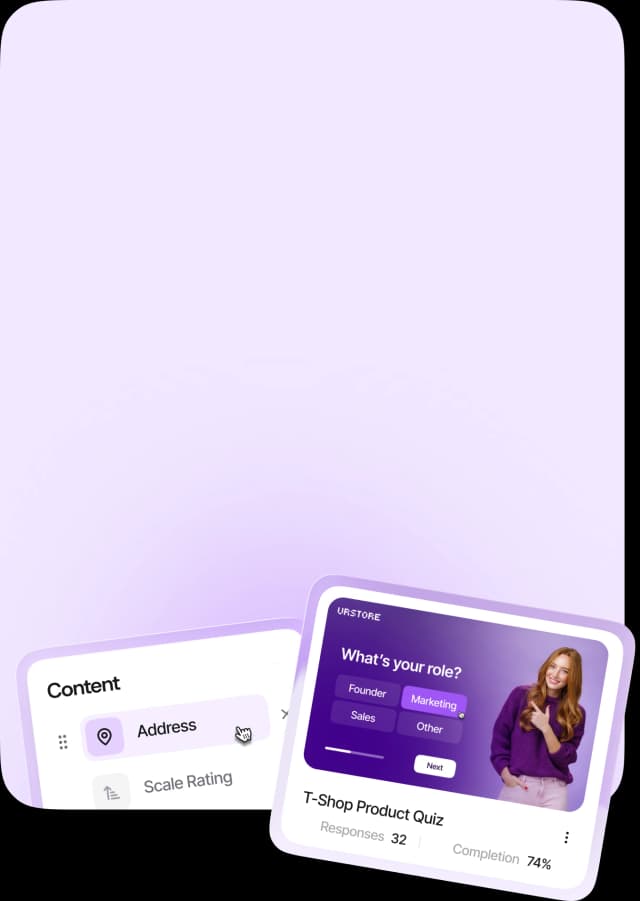
Interactive content can help here. A short quiz can segment prospects by use case, team size, or priority. That segmentation can lead to the right follow-up sequence and the right sales motion. It also makes messaging feel personal without writing dozens of custom campaigns.
This approach upgrades the B2B SaaS funnel without adding complexity. You keep the experience light for the buyer. You still get the insights your team needs.
Build a Nurture System That Moves Deals Forward
Most prospects will not convert on day one. They need reminders, comparison points, and reassurance. Nurture is where many B2B teams either win or waste months.
Create a simple nurture sequence that does three things. It delivers value, it addresses objections, and it shows proof. Keep emails short. Keep one CTA. Link to one asset that matches the stage.
Segment nurture based on intent. Someone who reads an integration page is in a different mindset than someone who reads a general blog post. Someone who takes a quiz and selects “reduce churn” should not receive the same emails as someone focused on “improve lead quality.” Segmentation turns your SaaS marketing funnel into a system that adapts.
Align Marketing and Sales Around One Pipeline View
A funnel breaks when marketing hands off leads that sales cannot use. It also breaks when sales ignores the signals marketing can provide. Alignment fixes both.
Define what qualifies a lead for sales follow-up. Use shared rules. Examples include a demo request, multiple product page visits, high engagement with pricing content, or a strong fit score from quiz results.
Then agree on response time. Speed matters. Faster follow-up improves conversion rates, especially when intent is high. Marketing can support sales with enablement assets, like one-page summaries, objection handling, and tailored email templates.
This is how a modern sales funnel supports revenue. It creates one shared view, so both teams optimize the same outcomes.
Measure the Right Metrics Across the Full Funnel
B2B SaaS funnels take time. If you only track top-of-funnel clicks, you will optimize the wrong things. Track metrics that connect to revenue.
Key funnel metrics include visitor-to-lead conversion, lead-to-opportunity conversion, sales cycle length, win rate, and expansion revenue. Also track engagement signals, like return visits, email clicks, and demo attendance.
Use these metrics to identify bottlenecks. If leads convert but opportunities stall, your proof assets may be weak. If demos happen but deals do not close, your positioning or pricing story may need work. Measurement turns the B2B SaaS funnel into a system you can improve steadily.
Final Thoughts
A successful funnel for B2B SaaS must respect the buyer’s reality. It must serve a committee, not one person. It must provide proof, not slogans. It must guide action while letting intent lead.
Build your SaaS marketing funnel with clear stage offers, smart qualification, segmented nurture, and tight marketing-sales alignment. Do that consistently and your modern sales funnel will convert more buyers, with less wasted effort and more predictable growth.